Harriet Boyd Hawes (1871-1945)
9 Wyman Road
9 Wyman Road was the home of trailblazing archeologist Harriet Boyd Hawes (1871-1945). Harriet was the discoverer and first director of Gournia (and later Vasiliki), one of the earliest major archeological excavation to uncover buried cities of Minoan civilization on the island of Crete, and the first woman ever to be invited to speak at the Archeological Institute of America. In 1904 ,The New York Times published an article about her entitled, "WOMAN DISCOVERS A BURIED CITY IN CRETE," describing Harriet as follows:
She is unassuming in her ways, modest, direct, and businesslike, and altogether as little as possible like what the average reader would imagine as an eminent explorer and discoverer would be. Yet this young woman is one of the leading scientific investigators of the time. [...] She calls her explorations ‘campaigns,’ and treats them as if they were battles by determined, scientific armies to wrest the secrets of ancient days from the earth. She is a general too, for she is in command of a little army of her own [...].
A 1905 Boston Globe article announcing her engagement to the British anthropologist Charles H. Hawes described Harriet as “America’s most famous woman archeologist.”
Apart from archeology, Harriet had a full humanitarian career as a wartime nurse in Crete during the Greco-Turkish War (1897), in Florida during the Spanish-American War (1898), and in the Somme during World War I. Her care for fellow humans did not end there. While a Cambridge resident at 9 Wyman, she was highly active in the 1933 Cambridge Shoemaker Strikes, which was part of a larger wave of unrest over labor rights in New England. She was sued by Cambridge’s Hyde Shoes Company for her role at the picket line. According to The Boston Herald (1933):
The plaintiff [Hyde & Sons Co.] alleges that the defendant [Harriet] came into the vicinity of its factory, spoke and attempted to induce the company to recognize a certain union known as the National Shoe Workers’ Association. The plaintiff alleges that the defendant has harassed and annoyed it, spending almost every working day for a continuous period of almost 120 days in the vicinity of the Hyde factory, interfering with its business, attempting to induce others in the plaintiff’s employ to break contracts there unless the company complied with the demand that it recognize and enter into a contract with the National Shoe Workers’ Association.
She was awarded an honorary doctorate by her alma mater, Smith College, in 1910, and was a lecturer in the Art Department of Wellesley College in the 1920s and 30s. See the petition to grant landmark status to 9 Wyman for a more detailed biography of Harriet’s amazing life.
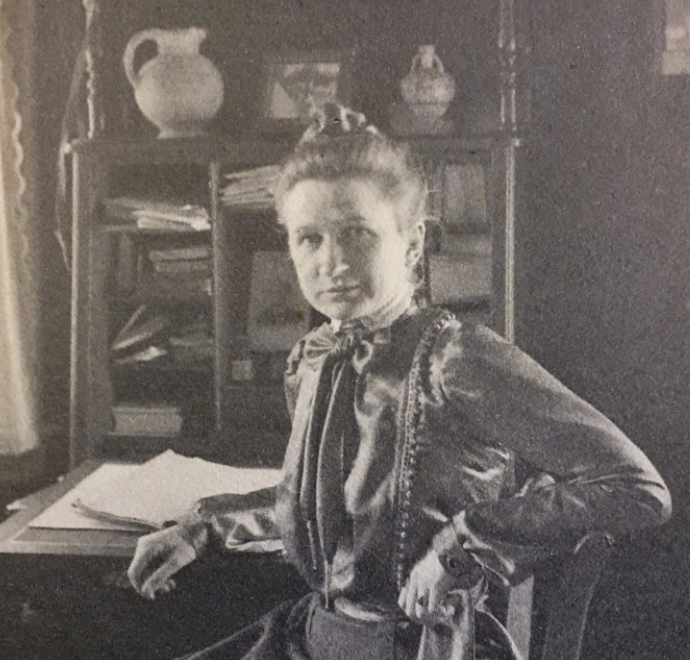
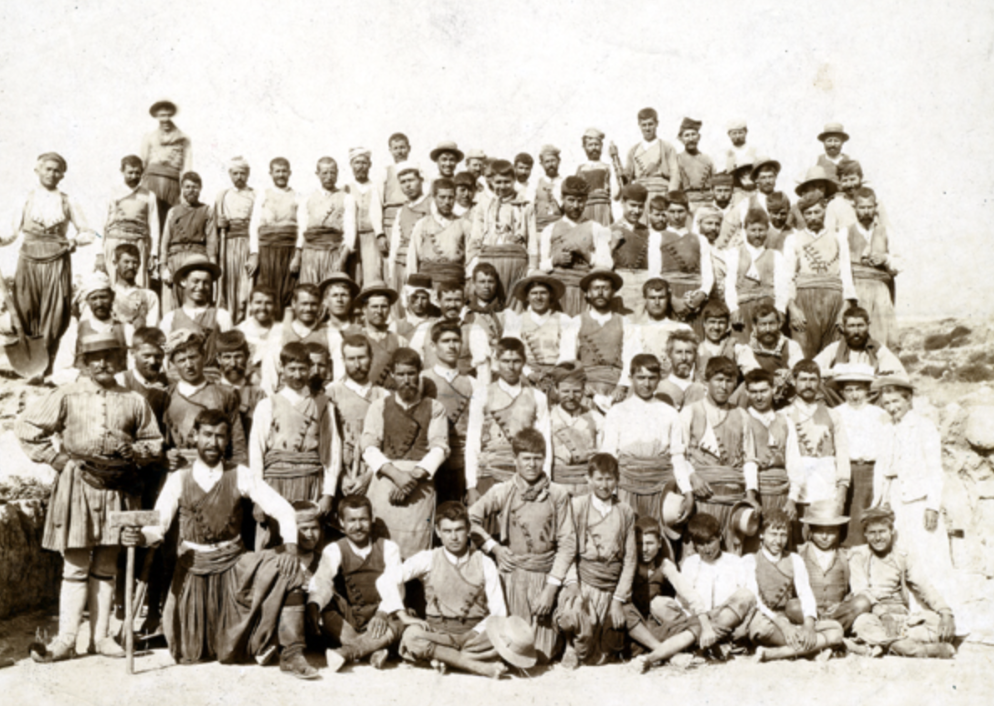
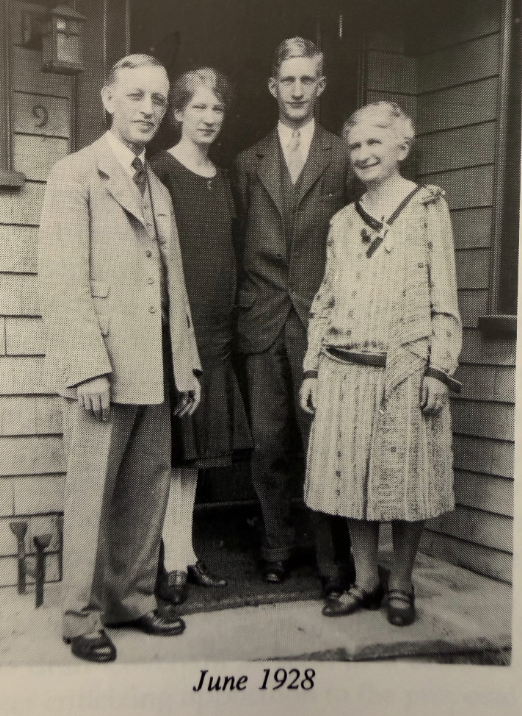
Photos: Top: Harriet Boyd Hawes at her desk , n.d. (Smith College Archives). Middle: Harriet (second row, far right), at excavation site in Gournia, 1904 (Harriet Boyd Hawes Papers, Smith College Archives). Bottom: Harriet (right) with her husband and children outside of their home at 9 Wyman.
Frank Wilczek (b. 1951)
4 Wyman Road
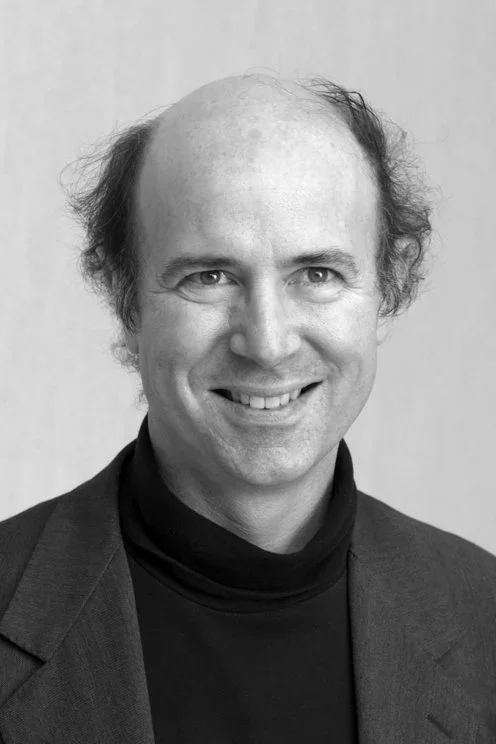
A 2004 Nobel Laureate in Physics, Frank Wilczek is one of the world’s preeminent theoretical physicists, known for the discovery of asymptotic freedom, the development of quantum chromodynamics, the invention of axions, and the discovery and exploitation of new forms of quantum statistics. He is the Herman Feshbach Professor Emeritus of Physics at the Massachusetts Institute of Technology. Among the many books he has authored, the three most recent are A Beautiful Question: Finding Nature’s Deep Design (2016), Fundamentals: Ten Keys to Reality (2022), andThe Lightness of Being: Mass, Ether, and the Unification of Forces (2010)
Photo: Nobel Prize Foundation Archive
E.E. Cummings (1894-1962)
& Marion Morehouse (1906-1969)
6 Wyman Road
American poet and painter E.E. Cummings (1894-1962)and supermodel Marion Morehouse (1906-1969) lived at 6 Wyman Road from 1952-1953. A Cambridge native, Cummings’s childhood home on Irving Street is already a designated landmark. He returned to Cambridge in 1952 to hold the Charles Elliot Norton Professorship in Poetry and present the Norton Lectures in Poetry, entitled Nonlectures, which he wrote while at 6 Wyman. Both these lectures and 6 Wyman Road are described in the newspaper article below:
On October 15, Cumming and Marion moved into a house at 6 Wyman Road in Cambridge, a little cul-de-sac far enough away from Harvard Yard to allow Cumming to feel secure from too much intrusion, and far enough from Harvard Square to make Marion feel housebound. His strains began to ease when the lectures began, for they proved to be a great popular success. The first night, October 25, Sanders Theater in Memorial Hall, the scene of Estlin’s commencement triumph in 1915, was packed, and students who were turned away at the door climbed fire escapes. [...]”.
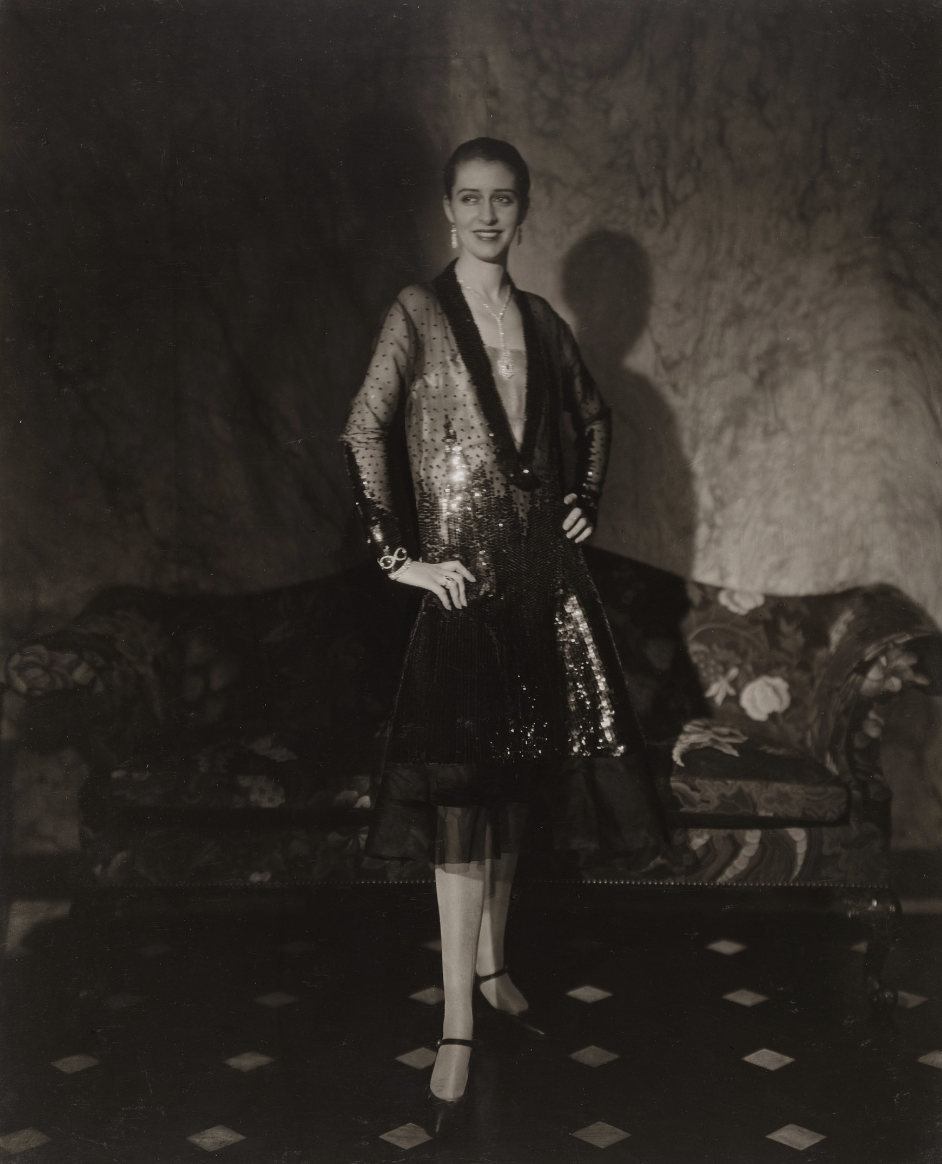
Morehouse had a storied career in her own right. Often referred to as the first super model, she was described by the famous Vanity Fair and Vogue photographer Edward Stiechen as "[t]he greatest fashion model I ever shot [...]”
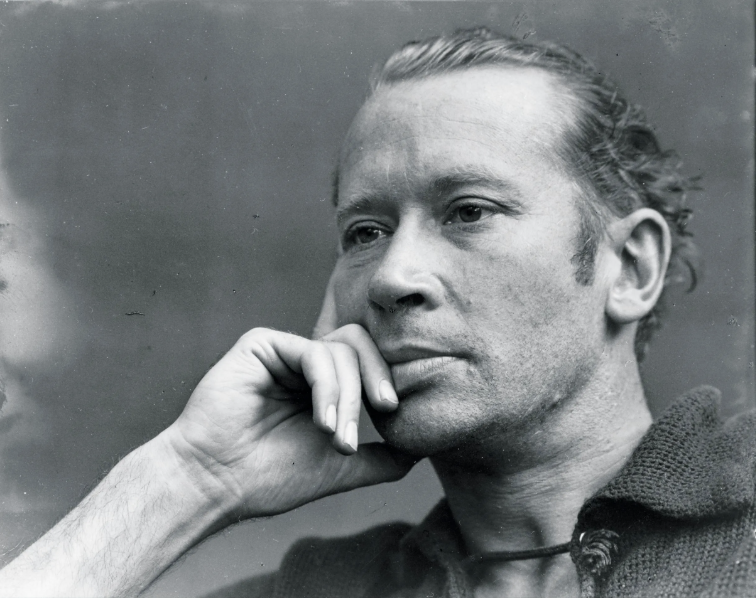
Photos: Top: Edward Steichen, Cheirut Gown. Marion Morehouse (Mrs. E.E. Cummings), 1927, gelatin silver print (Museum of Modern Art, New York); Bottom: E.E. Cummings, Photograph by Edward Weston / Photograph by Center for Creative Photography, Arizona.
Sumner Slichter (1892-1959)
10 Wyman Road
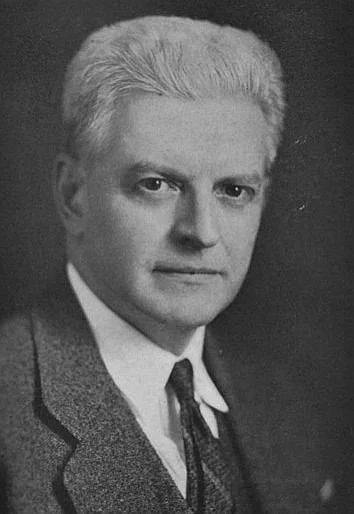
10 Wyman is the former home of American economist Sumner Slichter (1892-1959), who was the first Lamont University Professor at Harvard University. Described as "one of the really top economists in the world and probably the leading economist on labor problems in this country,” he was the author of 18 books on economics. His textbook Modern Economic Society (1926) was the standard introductory economic text before 1950. Massachusetts's ‘Slichter Law,’ enacted in 1947, is named after him for his chair role on the committee, permits the state to seize and operate industries where a work stoppage would endanger public health or safety. His conflictual relationship with the labor movement did not influence his wife, who was one of several women who joined Harriet in efforts to support the workers involved in the Cambridge Shoe Workers Strike of 1933.
Sumner was a regular contributor to The Atlantic, where you can see some of his past articles.
Photo: from The History of Economic Thought.
Manfred Leslie Karnovsky (1918-1999)
14 Wyman Road
Dr. Manfred Karnovsky was a South African biochemist and leading blood cell researcher who cast new light on the way white blood cells fight off bacteria. His research showed how white blood cells use oxygen to strengthen their defenses against bacterial intruders. He was also an expert in the biochemistry of sleep. With Prof. John Pappenheimer, he advanced the biochemical study of sleep-inducing substances in the brain.
At his death he was the Harold T. White Professor Emeritus of Biological Chemistry and Molecular Pharmacology in the department of biochemistry at Harvard University. See his obituary in The New York Times.
Photo: from Faculty of Medicine, Harvard Medical School